In the years after 1925, the world carried a buoyant confidence. Industry and finance were on the rise, old customs were being questioned, and creativity thrived on the desire for novelty. It was in this climate that Art Deco surfaced, a design movement destined to influence everything from skyscrapers to couture to cinema.
Its clean lines, geometric shapes, and striking contrasts stood in sharp opposition to the ornate styles of the previous century, and nowhere did this aesthetic find a more dazzling home than in Hollywood.
How Art Deco Entered the Film Industry
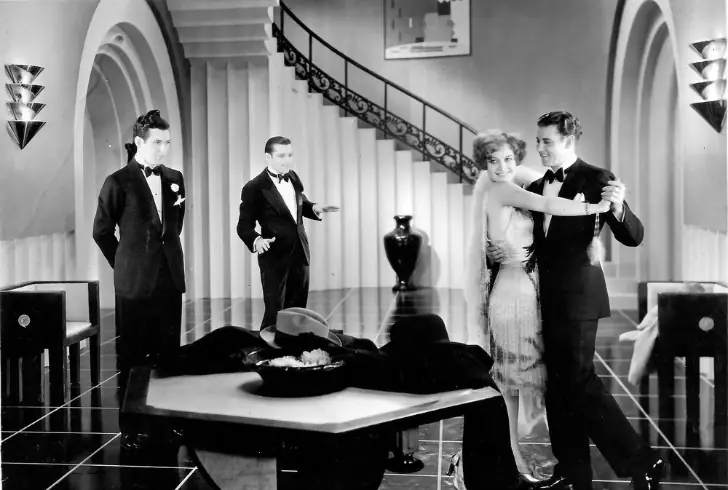
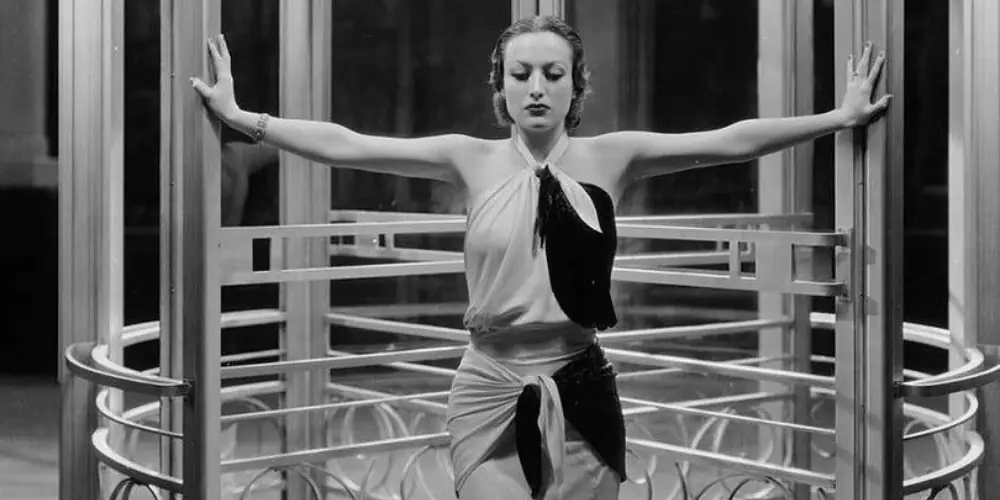
Art Deco’s international debut came in 1925, when Paris hosted the International Exhibition of Modern Decorative and Industrial Arts. Among the attendees was Cedric Gibbons, a young American set designer who immediately saw how its striking geometry could revolutionize film design. Just three years later, he brought Art Deco to Hollywood with Our Dancing Daughters (1928), a film that not only catapulted Joan Crawford into the spotlight but also showcased this daring new aesthetic.
Gibbons didn’t stop there. With more than 1,500 titles to his name over nearly four decades, he left an indelible imprint on Hollywood’s visual identity. His most enduring creation might not even be a set—it’s the Oscar statuette, a design recognized around the globe.
Why Art Deco Resonated With Audiences
Audiences were drawn to the style because it reflected the modern spirit of the age. Films embraced angular designs, polished surfaces, and sleek interiors that mirrored the aspirations of contemporary society. The glamorous parties and flapper lifestyle depicted on screen felt larger than life, yet still within reach.
This connection between film and real life grew stronger as wealthy fans began requesting replicas of sets for their homes. Gibbons’s designs, once intended for theaters, soon found their way into private estates. The boundary between cinema and everyday life blurred, as modern design leaped from the silver screen into actual living spaces.
Art Deco in Iconic Films
Throughout the 1930s, Hollywood continued to expand the reach of Art Deco. Its versatility allowed it to appear across genres—dramas, comedies, thrillers, and romances all made use of the striking aesthetic.
In “The Black Cat” (1934), director Edgar G. Ulmer contrasted traditional European ruins with a Bauhaus-inspired mansion, creating a chilling backdrop for a psychological battle between Boris Karloff and Bela Lugosi. The modern design became more than decoration; it amplified the tension and helped shape the story.
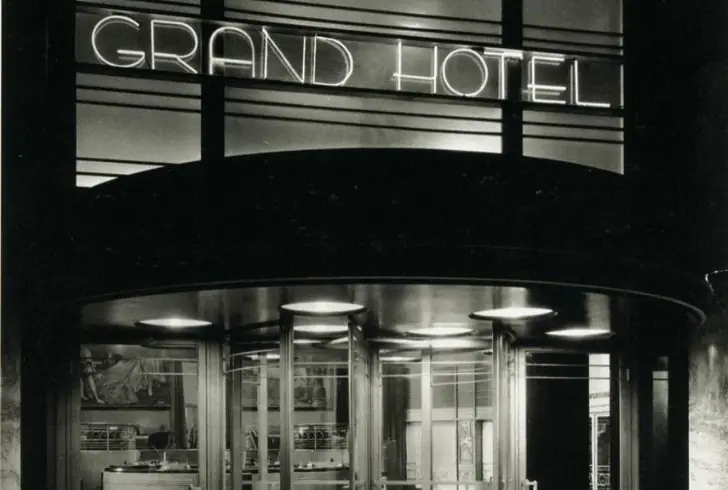
Another example, “Grand Hotel” (1932), placed its ensemble cast in a Berlin hotel lobby with a massive black-and-white checkered floor. The space became a stage for romance, deceit, and ambition, its bold geometry reinforcing the theme of characters maneuvering like chess pieces.
Comedy found its place in Art Deco settings as well. Ernst Lubitsch’s Trouble in Paradise (1932) draped romance and mischief across gleaming staircases and polished interiors, while the Marx Brothers used the sleek backdrop of a modern mansion in Animal Crackers (1930) to poke fun at the pretensions of high society.
Cultural Significance of Art Deco in Film
Art Deco was never just decoration. It carried the spirit of modern progress—speed, elegance, and technical innovation—capturing the restless energy of the Jazz Age and the dawn of sound cinema. Audiences saw not only a reflection of their aspirations but also a guide to what was fashionable in architecture, clothing, and interior design.
Movies became a cultural feedback loop. The glamorous settings projected on screen found their way into people’s living rooms, kitchens, and wardrobes. Hollywood wasn’t simply a dream factory—it was a design authority for a generation eager to live modern lives.
Restoring Art Deco’s Cinematic Legacy
Art Deco’s contribution to American film went beyond ornamentation. It was a defining visual language that brought stories to life with bold sophistication. Unfortunately, many of the great works from that period are difficult to see today in their original quality, which makes restoration projects all the more valuable.
From Our Dancing Daughters to Grand Hotel, Art Deco made cinema an extension of modern design culture. Its influence persists as proof that style and storytelling, when intertwined, can define an era’s spirit and leave a cultural legacy that outlives it.